
Marketplace Seller Payout Calculations Need More Than a Payout File
A practical article for marketplace operators that need seller payouts to be explainable, repeatable, and ready for finance review.
Marketplace seller payout calculations are often treated as a file-generation problem: calculate the net amount, export a payout CSV, and send it to the rail. That works only when the payout math is simple and no one questions the result.
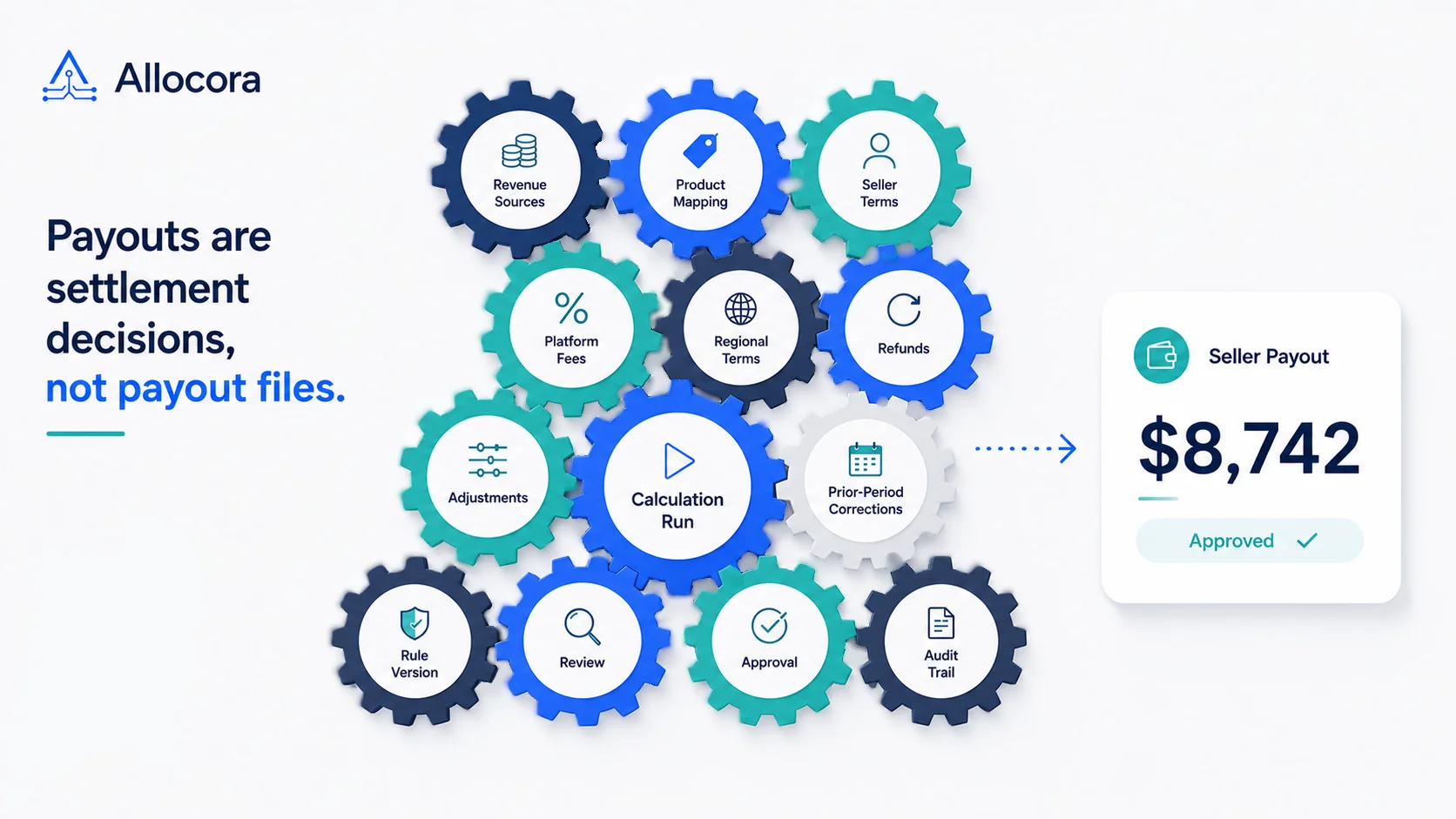
Most marketplace teams need more. Seller payouts can involve platform fees, refund adjustments, seller-specific terms, product categories, regions, multiple revenue sources, and prior-period corrections. When a seller asks why their payout changed, the team needs more than a final file. It needs the calculation trail.
Allocora is built as the calculation and governance layer before payout execution. It calculates who gets paid, preserves deterministic run evidence, generates seller or payee statements, and exports structured close artifacts. It does not move money or replace the marketplace platform.
This article explains what marketplace seller payout calculations should include beyond a simple payout file.
Seller payouts are settlement decisions
A seller payout is not only a transfer amount. It is a settlement decision based on revenue, fees, adjustments, and rules.
Typical seller payout calculations may need to account for:
- Gross transaction revenue.
- Platform fee percentage.
- Seller tier.
- Product category.
- Refunds.
- Adjustments.
- Regional terms.
- Seller-specific agreements.
- Period cutoffs.
- Prior-period corrections.
If those details are calculated in a spreadsheet, the marketplace team has to trust every formula, filter, and manual edit. If they are calculated directly inside a payout rail without a separate review layer, the team may lack the evidence needed to explain the amount before money moves.
Allocora's marketplace solution positions the product around deterministic settlement calculations, transparent seller statements, and structured payout exports.
Separate payout math from money movement
Marketplace teams often already have a payout rail. That rail may handle transfers, recipient onboarding, identity checks, compliance workflows, scheduling, retries, and reporting on transferred funds. Allocora is not trying to replace that category.
Allocora handles the step before payout execution: calculation, evidence, and governance.
The clean workflow is:
- Import transaction data from Stripe or CSV/XLS/XLSX.
- Map products and sellers.
- Define fee and adjustment rules.
- Run deterministic settlement calculations.
- Review outputs before payout execution.
- Generate seller statements and structured exports.
- Send reviewed amounts to the payout rail or finance workflow.
This makes the payout rail a downstream executor, not the only place where payout truth exists.
Product mapping prevents silent payout errors
Marketplace payouts often depend on product context. A seller may have one fee for one product group and another fee for a different product group. Refund treatment may vary by category. Product mapping is therefore part of payout governance.
Allocora detects external product identifiers and creates mapping records. Operators can map, remap, ignore, unignore, and merge external product mappings through versioned flows. Calculations can be blocked when unmapped product identifiers are in scope.
For marketplace operators, that is a useful safety gate. It prevents a settlement run from treating unknown products as if they were fully classified.
Without this step, marketplaces risk:
- Applying a default fee to a product that needs special treatment.
- Missing a seller-specific mapping.
- Including ignored products in payout logic.
- Creating a payout file before product context is complete.
These gaps should be visible before close.
This review step is closely related to Rule Simulation for Payout Calculations Before Close, where teams validate payout logic before generating outputs.
Rules should model fees and adjustments directly
Seller payout logic should not be trapped in copied formulas. It should be modeled as rules that can be reviewed, versioned, simulated, and tied to outputs.
Allocora supports flat and tiered allocation rules, metadata conditions, rule priority, and conflict detection. It also supports refund and adjustment revenue types from Stripe and CSV imports. Refund rows are preserved as separate immutable revenue records rather than silently mutating prior sales.
That gives marketplace teams a way to model:
- Platform fees.
- Seller allocations.
- Product-specific terms.
- Tiered fee structures.
- Refund deductions.
- Adjustment credits or debits.
- Conditional rules using metadata.
The benefit is not only flexibility. It is explainability. A seller statement should be able to connect an amount to the rule and source data that produced it.
Deterministic settlement runs create reviewable evidence
Settlement calculations should produce a run that can be reviewed before payment. Allocora's calculation runs are deterministic and snapshot-based. The same inputs and rules produce the same results, and the run captures context such as rule versions, mapping snapshots, revenue query hashes, status, and line-item outputs.
This is the point where finance can review:
- Total seller payouts.
- Fee deductions.
- Refund impact.
- Unmapped product blockers.
- Rule conflicts.
- Payee-level allocation summaries.
- Prior-period comparison context when available.
The run becomes a close artifact. It can be approved or locked depending on workflow, and locked runs are the basis for statement generation.
That is much stronger than exporting a payout file from a mutable spreadsheet.
We explored the limitations of spreadsheet-based workflows in Replace Spreadsheet Commission Tracking Before Month-End Breaks.
Seller statements reduce disputes
Marketplace sellers need to understand the payout, not just receive it. A seller statement should provide enough context to answer basic questions:
- What period does this payout cover?
- What revenue was included?
- What fee was deducted?
- Were refunds applied?
- What is the net payout?
- Where can the seller see line-level detail?
Allocora supports payee statements generated from locked calculation runs. The marketplace solution frames these as seller allocation statements with fee breakdowns and structured payout export files. The current product supports summary and product-level statements, PDF generation, batch ZIPs, share URLs, and email delivery records.
Seller statements should be generated from the same calculation run that finance reviewed. That alignment reduces the chance that seller communication and payout execution diverge.
That review process is also a key part of How Immutable Calculation Runs Create a Payout Audit Trail.
Refund handling should be explicit
Refunds are one of the easiest places for payout workflows to become unclear. A marketplace may need to deduct a refund from the seller, retain part of a fee, reverse a prior allocation, or apply an adjustment in a later period. If refund handling lives in a spreadsheet note, the seller statement may not explain the payout movement.
Allocora's revenue model supports explicit sale, refund, and adjustment revenue types. Stripe refund or reversal-like events are preserved as separate rows, and CSV/XLS/XLSX imports can also include refund and adjustment rows with validation around signs. This keeps refund impact visible to the calculation workflow instead of hiding it inside overwritten sales data.
For marketplace operators, the practical question is simple: can the team explain refund impact before the payout file is sent? If not, the settlement workflow needs a stronger review layer.
Structured exports should fit downstream workflows
Marketplaces still need files. The difference is that payout files should be generated after the calculation is reviewed, not assembled manually during calculation.
Allocora supports structured exports for calculation runs, revenue summaries, payee totals, payee statement summaries, payee statement products, detailed statements, and auditor bundles. Export generation is queued and audit logged.
For marketplace teams, useful exports may include:
- Seller payout totals.
- Fee breakdowns.
- Refund adjustments.
- Statement summaries.
- Calculation item detail.
- Close packages for finance.
The goal is a repeatable output process. If the export shape changes every month depending on who built the file, the team still has a fragile settlement workflow.
When a payout rail alone is enough
A fair comparison should acknowledge when a payout rail alone may be sufficient. Allocora's payout rail comparison says a rail alone can fit when payout logic is straightforward, there is no need to prove how amounts were calculated, the rail handles the full workflow end-to-end, and there are few payees with a single revenue source.
That is a reasonable boundary.
Add Allocora when:
- Payout logic involves tiers, conditions, or multiple sources.
- Sellers need structured statements.
- Finance needs close artifacts.
- Someone needs to explain how a payout was calculated.
- Governance controls matter before money moves.
- Calculations recur every period.
The product is strongest when calculation evidence matters.
Marketplace launch checklist
Before launching a seller payout workflow, verify the following:
- Revenue sources are connected or importable.
- Product identifiers can be mapped.
- Sellers are represented as payees.
- Fee and adjustment rules are versioned.
- Refund rows are handled explicitly.
- Rule conflicts are detected before close.
- Calculation runs are deterministic.
- Outputs can be reviewed before payout execution.
- Seller statements can be generated from locked runs.
- Structured exports are available for downstream payout or finance workflows.
If any of these steps require manual spreadsheet work, the marketplace may still have an ungoverned settlement process.
Launch takeaway
Marketplace seller payout calculations need more than a payout file. They need governed input handling, product mapping, fee rules, refund treatment, deterministic runs, seller statements, and structured exports.
Allocora is designed to be the settlement calculation layer before payout execution. Marketplace teams can keep their payout rail while improving the math, evidence, and review process that determine what each seller should receive.
Marketplace teams often already have a way to move funds. The stronger question is whether they have a reviewable settlement calculation before those funds move.
Related Articles
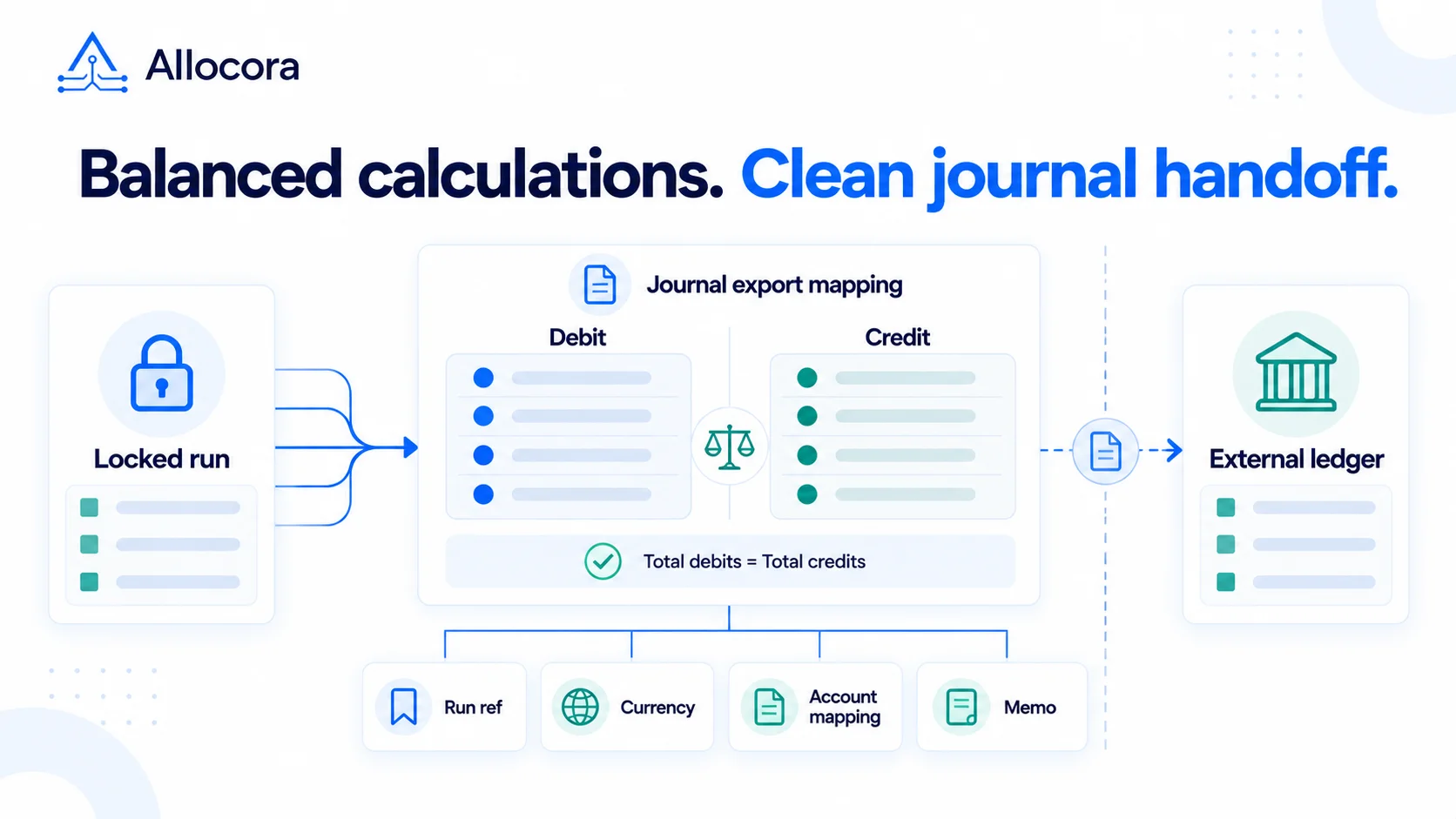 Journal Export Planning for Revenue Share, Royalties, and Partner Payouts
Plan a reviewed accounting handoff for revenue share, royalties, and partner payouts, with journal-basis choices, account mapping, and vendor-specific import checks.
Oct 15, 2026 - 8 min read
Journal Export Planning for Revenue Share, Royalties, and Partner Payouts
Plan a reviewed accounting handoff for revenue share, royalties, and partner payouts, with journal-basis choices, account mapping, and vendor-specific import checks.
Oct 15, 2026 - 8 min read
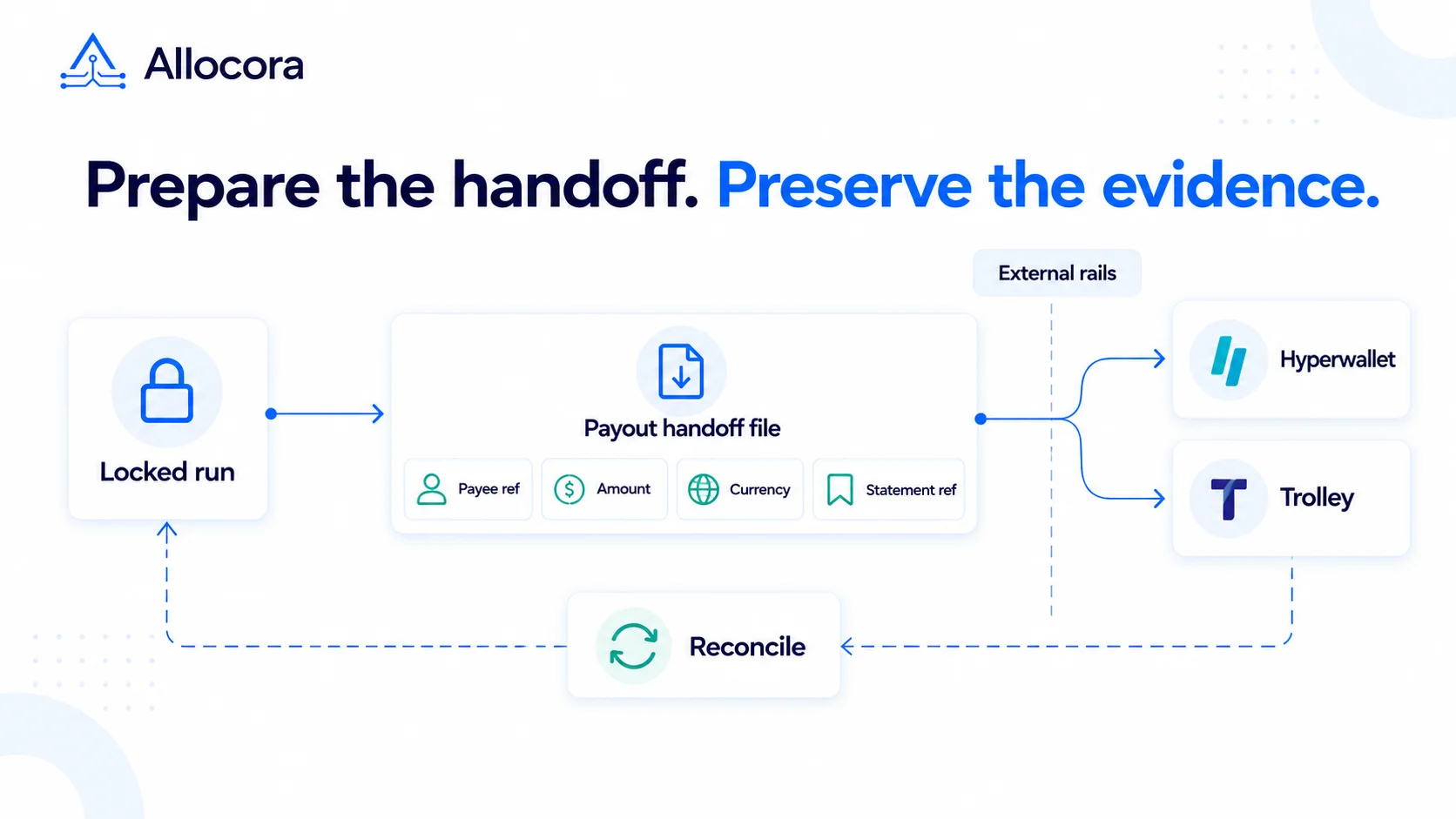 Hyperwallet and Trolley Payout Handoff Planning: Evidence and Fields to Prepare
Plan a Hyperwallet or Trolley payment handoff by separating locked obligations, export mapping, provider checks, and reconciliation evidence. This is not a provider-ready upload template.
Oct 05, 2026 - 5 min read
Hyperwallet and Trolley Payout Handoff Planning: Evidence and Fields to Prepare
Plan a Hyperwallet or Trolley payment handoff by separating locked obligations, export mapping, provider checks, and reconciliation evidence. This is not a provider-ready upload template.
Oct 05, 2026 - 5 min read
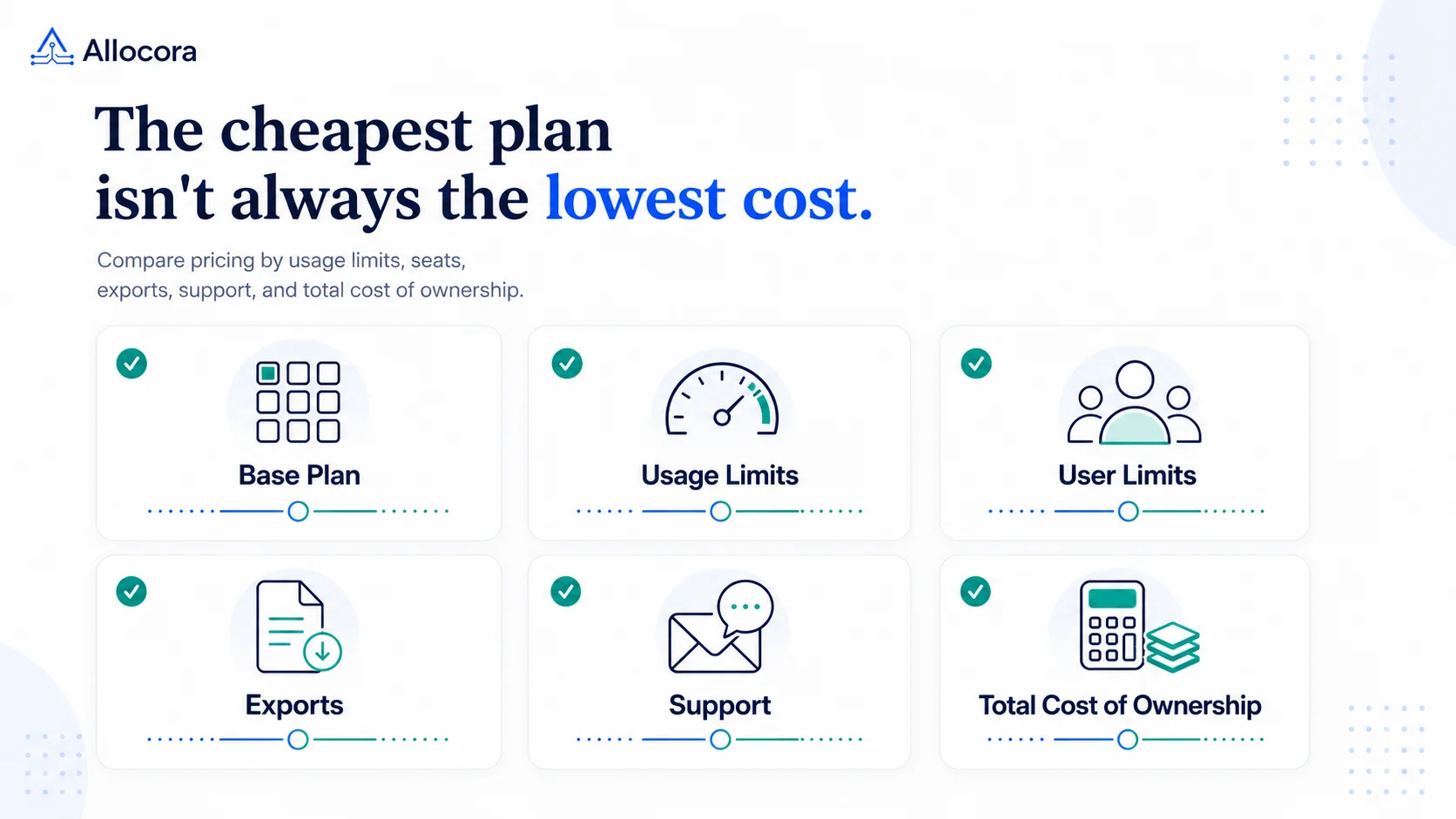 Payout Software Pricing Models: Usage Limits, Fees, and a TCO Checklist
A practical checklist for comparing payout software pricing models, usage limits, add-ons, implementation effort, and total cost before choosing a plan.
Aug 05, 2026 - 9 min read
Payout Software Pricing Models: Usage Limits, Fees, and a TCO Checklist
A practical checklist for comparing payout software pricing models, usage limits, add-ons, implementation effort, and total cost before choosing a plan.
Aug 05, 2026 - 9 min read